Connect OBS to MJET Labs

Send your video from OBS Studio to MJET Labs, then send it to YouTube, Twitch, Facebook, or a custom RTMP destination. You can keep the original audio or choose translated audio for each destination.
You’ll need an MJET Labs account, OBS Studio, and access to the platform where you want to broadcast. For translated audio, make sure your account has translation credit.
1. Create a stream
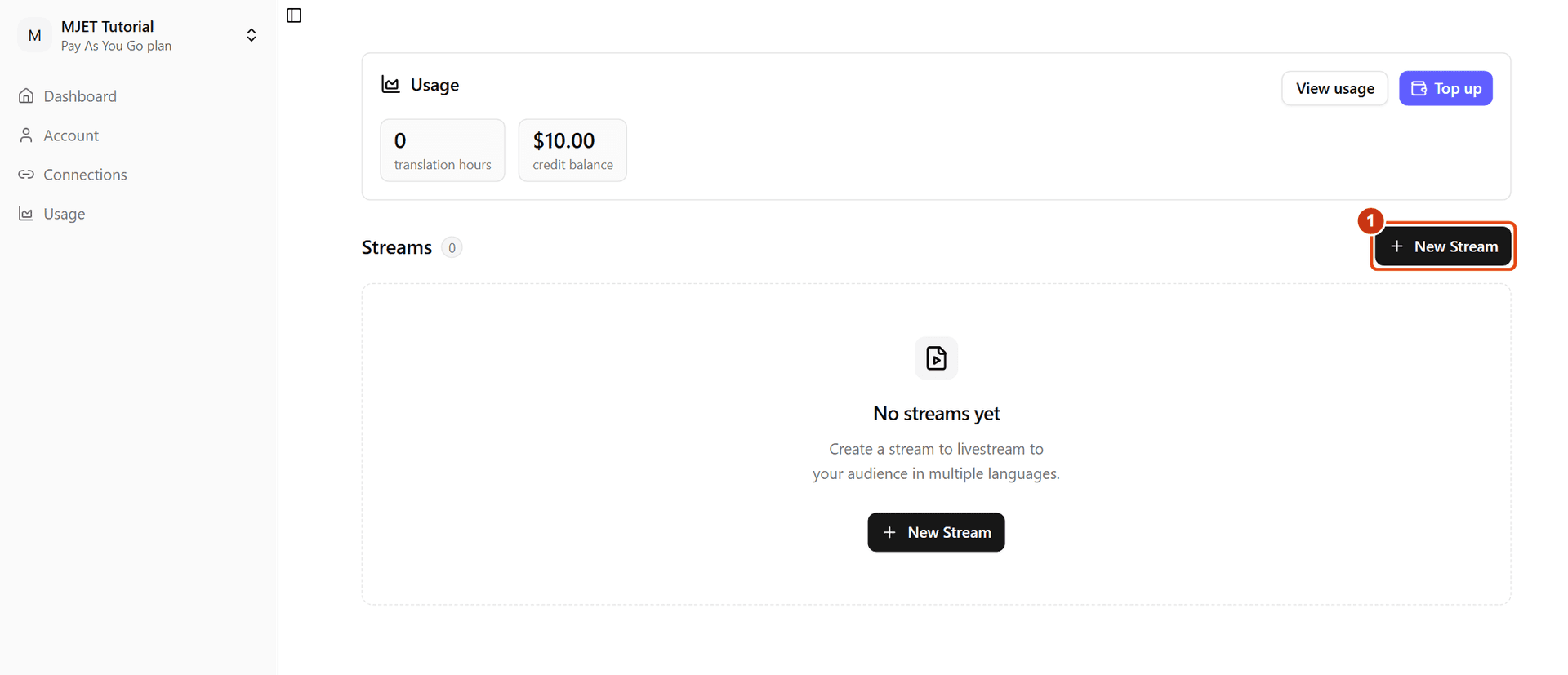
Open your Dashboard and click New Stream.
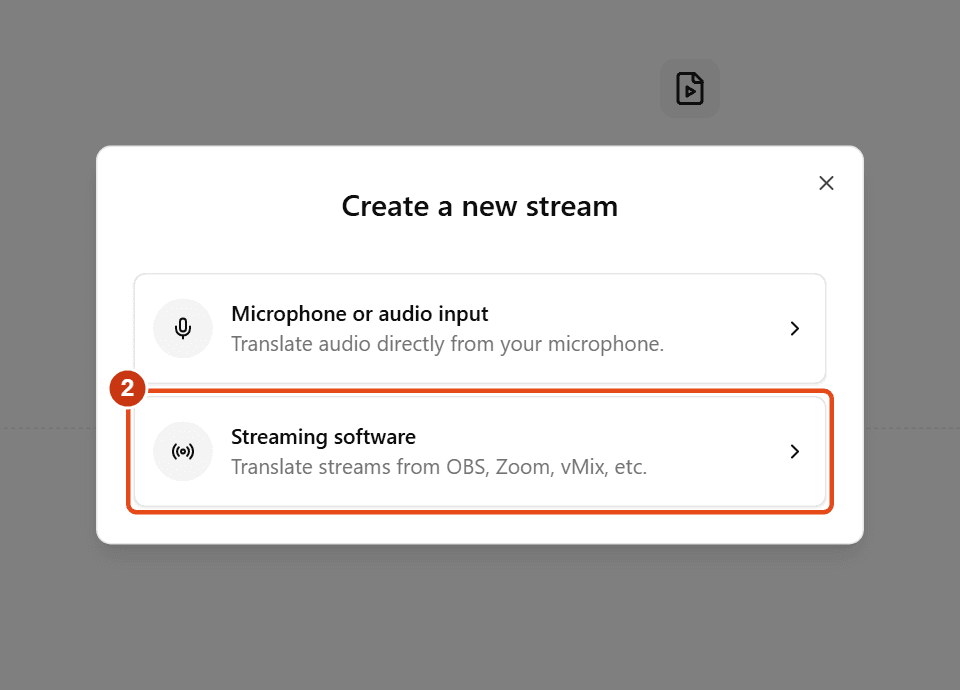
Choose Streaming software to connect OBS.
MJET Labs opens your stream page. It will show Offline until OBS starts sending video. You can click the stream title to edit its details.
2. Copy your connection details into OBS
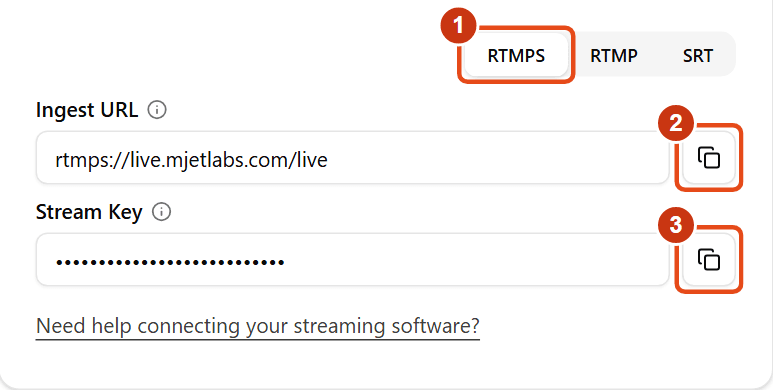
Below the video preview, find the protocol tabs and connection fields:
- Leave RTMPS selected for an encrypted connection. If you need RTMP, select RTMP and copy the URL shown for that tab.
- Click the copy button beside Ingest URL.
- Click the copy button beside Stream Key.
In OBS, open Settings → Stream and choose Custom… as the service. Fill in these fields:
- Server: paste the Ingest URL from your selected tab.
- Stream Key: paste the Stream Key from your MJET Labs stream.
Click Apply, then OK. OBS also documents these fields in its Stream settings guide.
Use your MJET Labs stream key in OBS. You’ll use your YouTube or other platform’s key when adding a destination.
3. Choose where to send your stream
On the stream page, click Add destination.
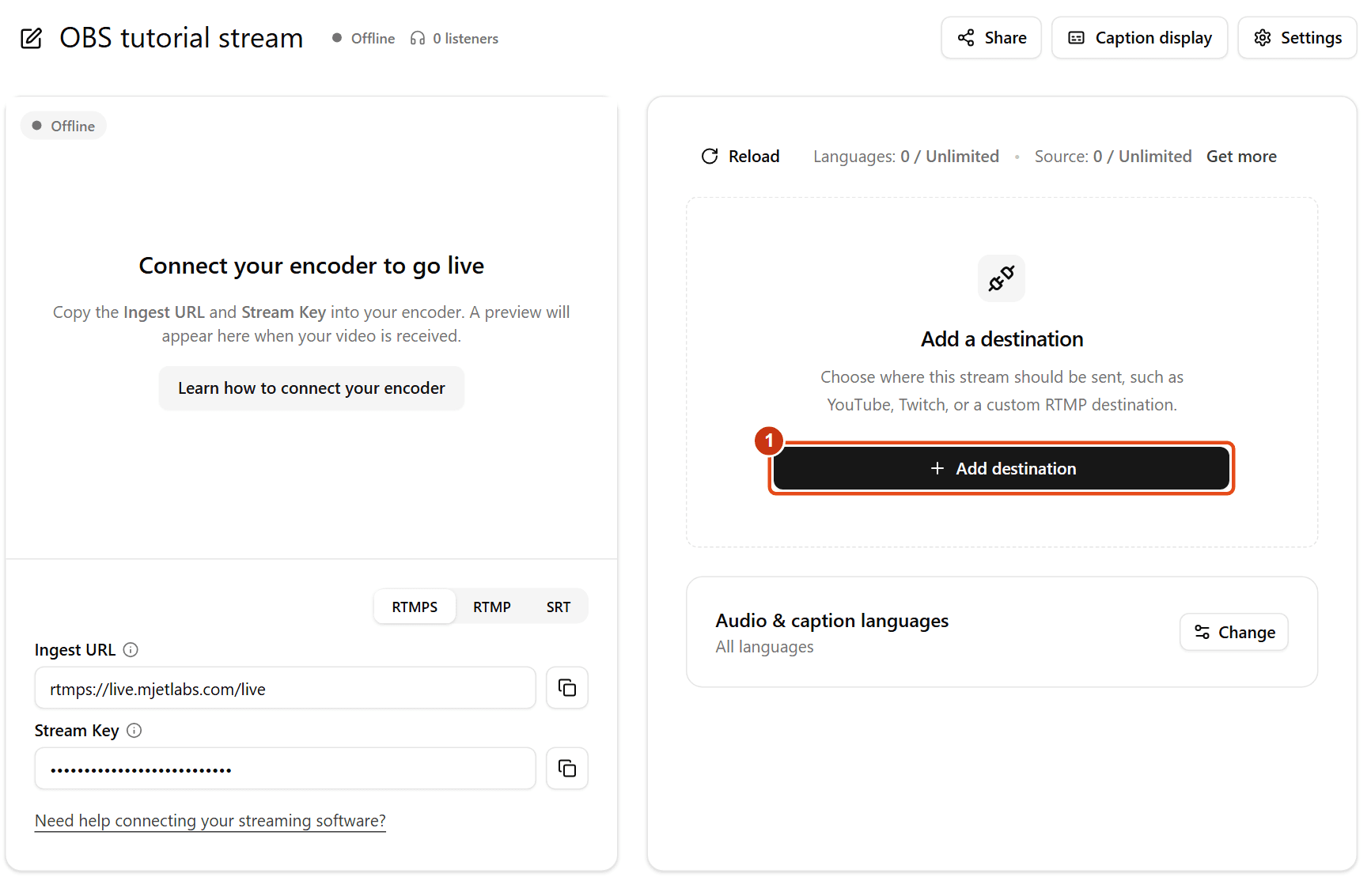
Select YouTube, Twitch, Facebook, or Custom RTMP.
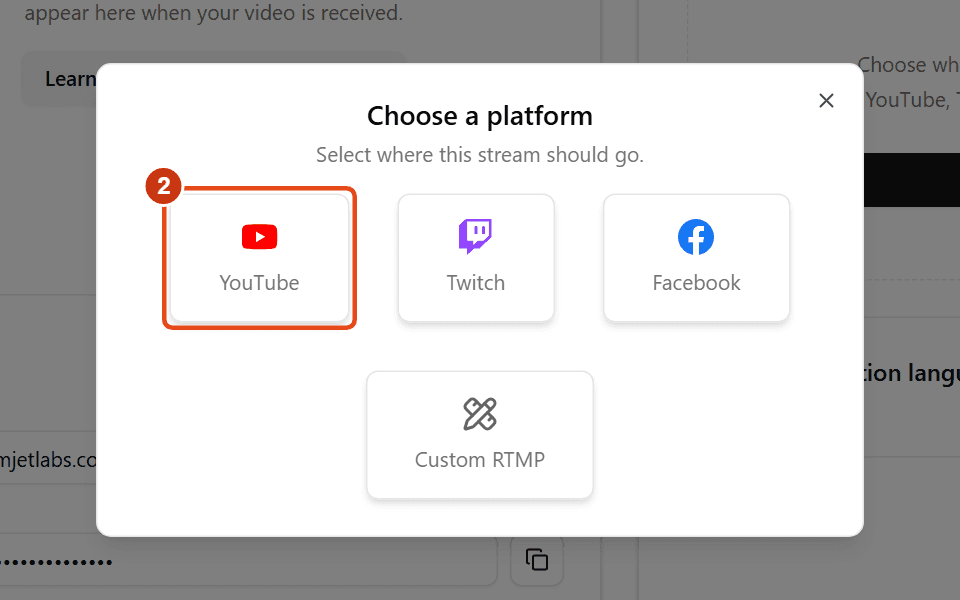
4. Configure your destination
Connect a YouTube account
Select Connect Account, then click Connect YouTube. Follow the prompts to authorize your account and return to MJET Labs.
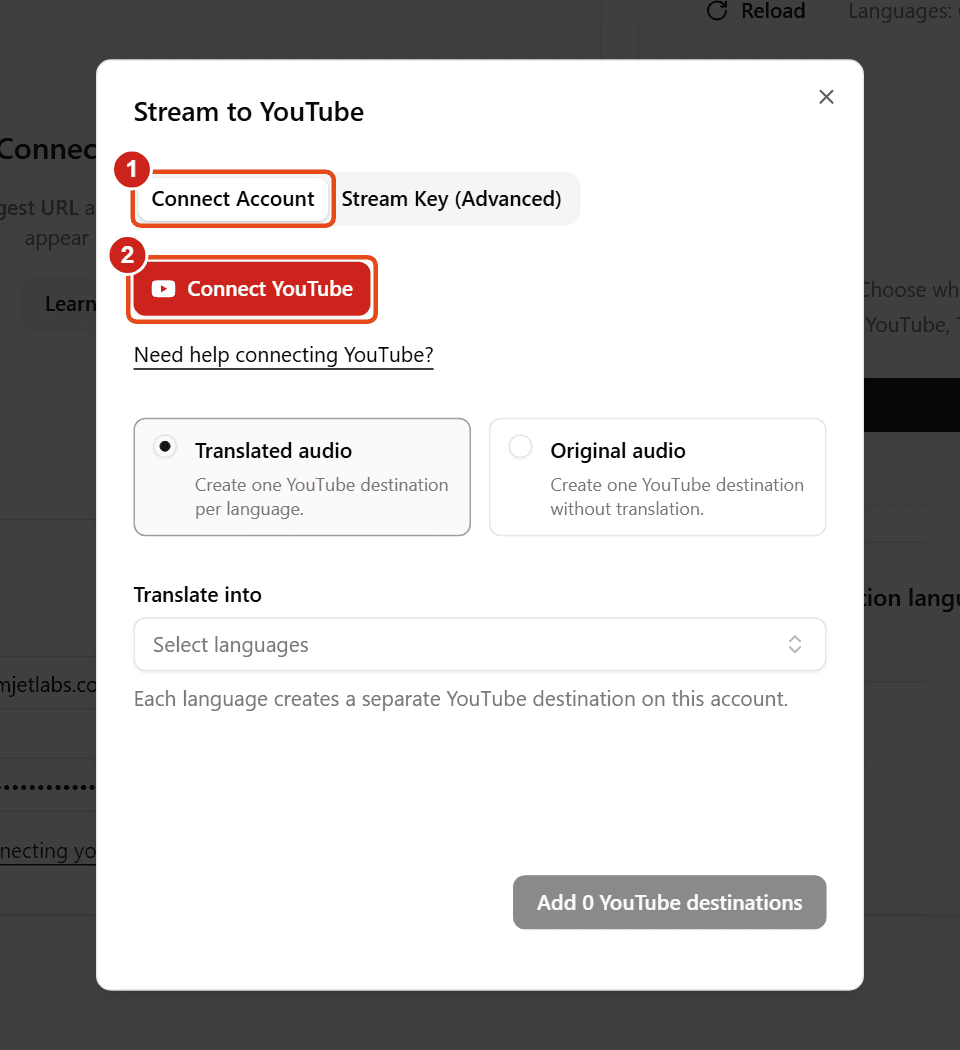
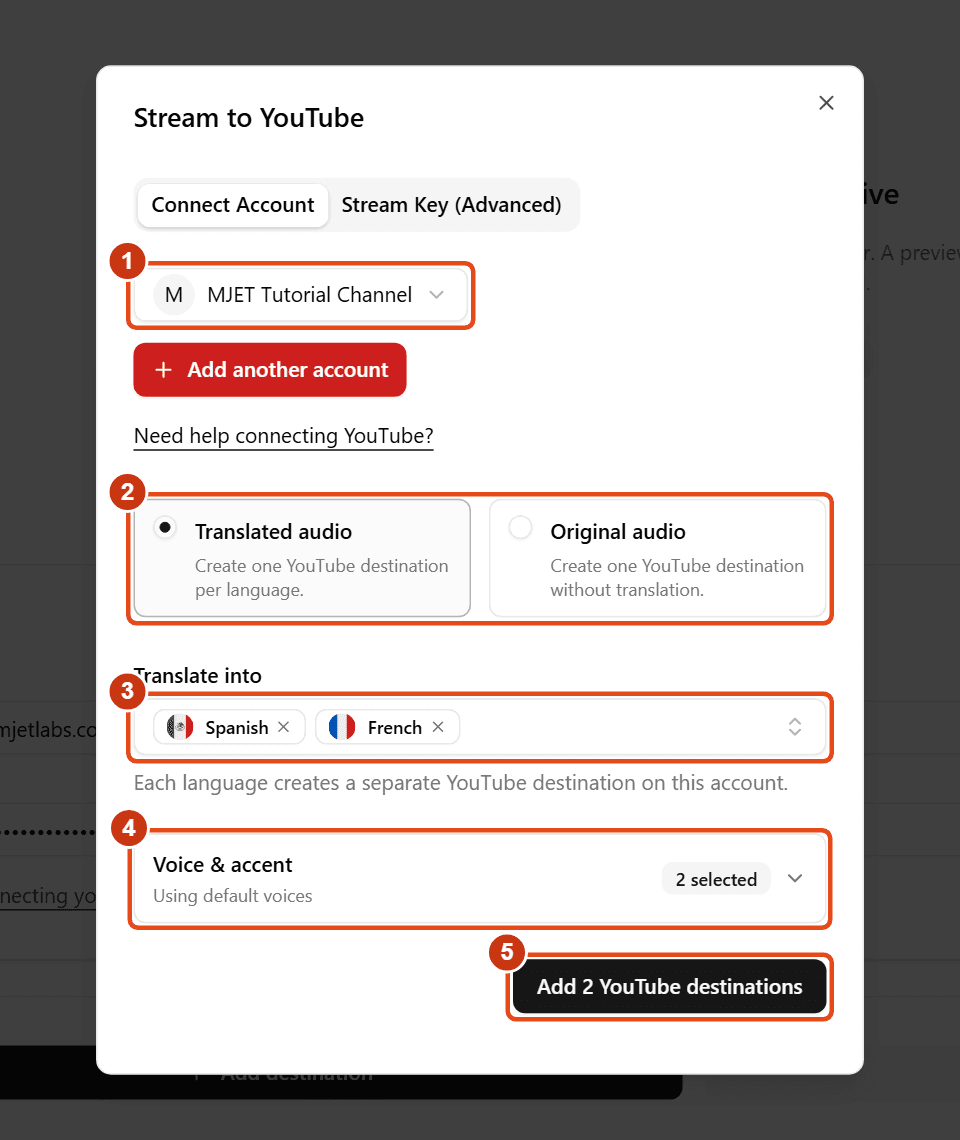
Once your account is connected:
- Select the YouTube account you want to use.
- Choose Translated audio or Original audio under Channel audio.
- For translated audio, open Translate into, select your languages, and click Done. Each language creates a separate YouTube destination.
- Optionally expand Voice & accent to choose the voice for each language.
- Click Add YouTube destinations to save your selections. The button shows how many destinations you’re adding. For original audio, click Add destination.
Use a destination stream key instead
If you already have a YouTube stream key, select Stream Key (Advanced):
- Select Stream Key (Advanced).
- Paste the destination platform’s Stream Key. Get Stream Key opens that platform’s dashboard. For Custom RTMP, also fill in its RTMP URL.
- Choose Translated audio or Original audio under Channel audio.
- For translated audio, choose Translate into.
- Choose Voice & accent. Original audio does not need a language or voice.
- Click Save Stream.
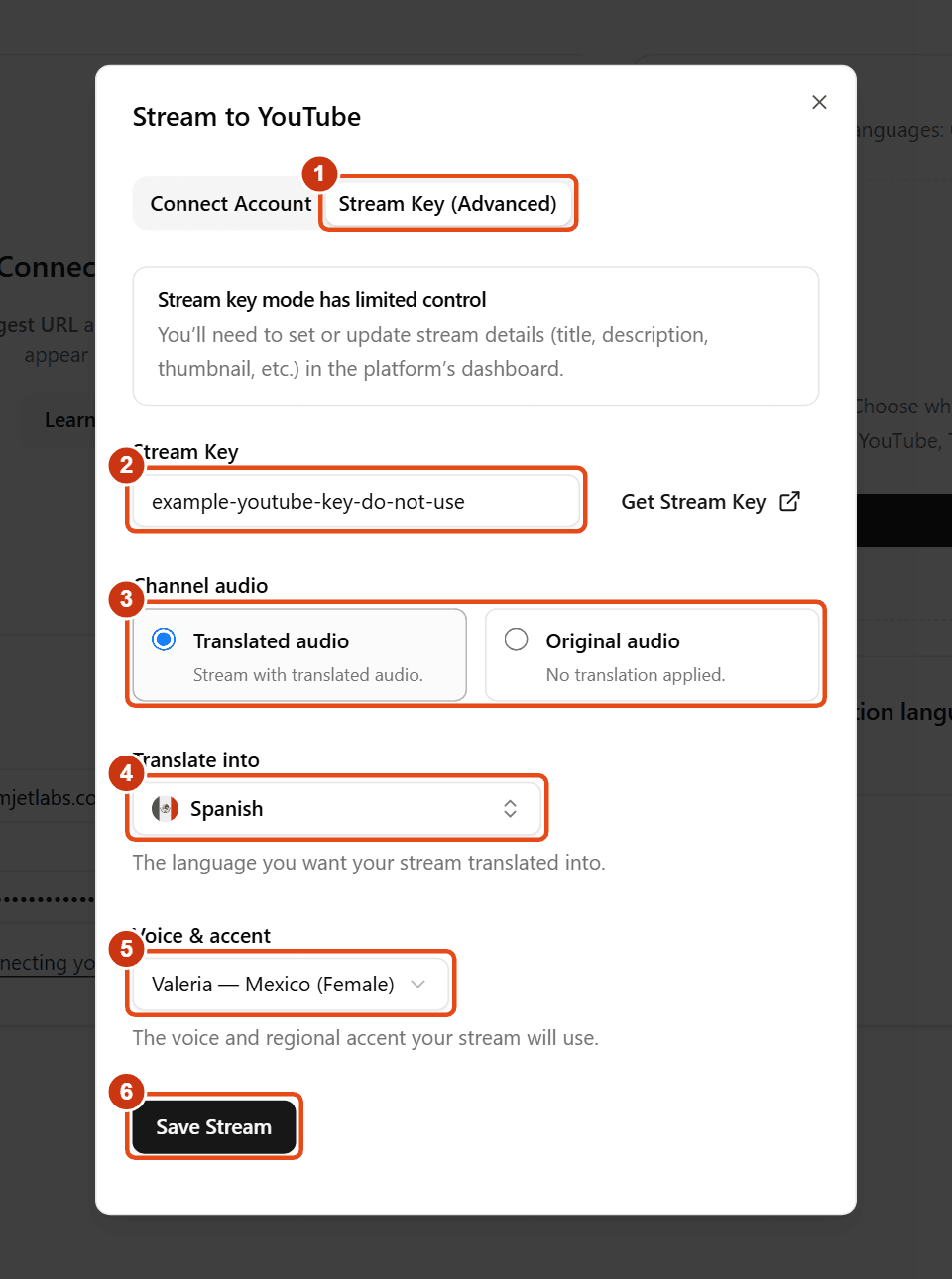
In stream key mode, manage the broadcast title, description, thumbnail, and any platform-specific go-live controls in the destination platform’s dashboard. Account connection options vary by platform; follow the options shown in its dialog.
5. Start streaming and check your broadcast
- Confirm your destination appears on the MJET Labs stream page and is enabled.
- In OBS, check your scene, video sources, and audio mixer, then click Start Streaming.
- Return to MJET Labs. The preview appears when your video is received; check the source and destination statuses as they start.
- Open the destination platform’s live dashboard to confirm the video and audio arrive. Complete any Go Live confirmation required there.
To send the same OBS feed to another platform, click Add destination again. Available destinations and translated languages depend on your account limits.
To stop sending video, click Stop Streaming in OBS and check that the destination broadcast has ended. If disconnect protection is enabled, MJET Labs may briefly wait for OBS to reconnect before ending the session.
OBS settings
Use H.264 video, AAC audio, and a 2-second keyframe interval as a starting point. Choose a resolution, frame rate, and bitrate your upload connection and destination platforms support. See the destination’s encoder requirements, such as YouTube’s live encoder settings, before broadcasting.
Troubleshooting
- MJET Labs stays Offline: Check that OBS is streaming and that its Server and Stream Key match the MJET Labs connection fields. If you switched between RTMPS and RTMP, copy the Ingest URL again.
- MJET receives video but the destination does not: Check the destination is enabled, its stream key is correct, and its platform dashboard does not require a separate Go Live confirmation.
- Black video: Make sure your OBS scene has a visible video source, such as a display, window, game, or camera.
- Missing audio: Check the OBS audio mixer and the destination’s Channel audio choice. For translated audio, also check the selected language and voice.
- Dropping frames: Reduce your bitrate or resolution, and check your upload connection.
FAQ
Can I stream to several platforms at once?
Yes. Use Add destination for each platform, within your account limits. OBS sends one feed to MJET Labs.
Can I send the original audio without translation?
Yes. Choose Original audio in the destination form. If your account has no translation credit, the form starts on original audio, and any translated destination you add stays off until you add credit.
Where do I find my YouTube stream key?
Open YouTube Studio’s live control room, or use Get Stream Key in the YouTube stream key form.
Is there a video walkthrough?
There is an earlier OBS walkthrough. It shows an older interface; follow the steps and screenshots above for the current layout.
Last updated: October 21, 2026